
24/7 Network Monitoring Benefits for Manufacturers
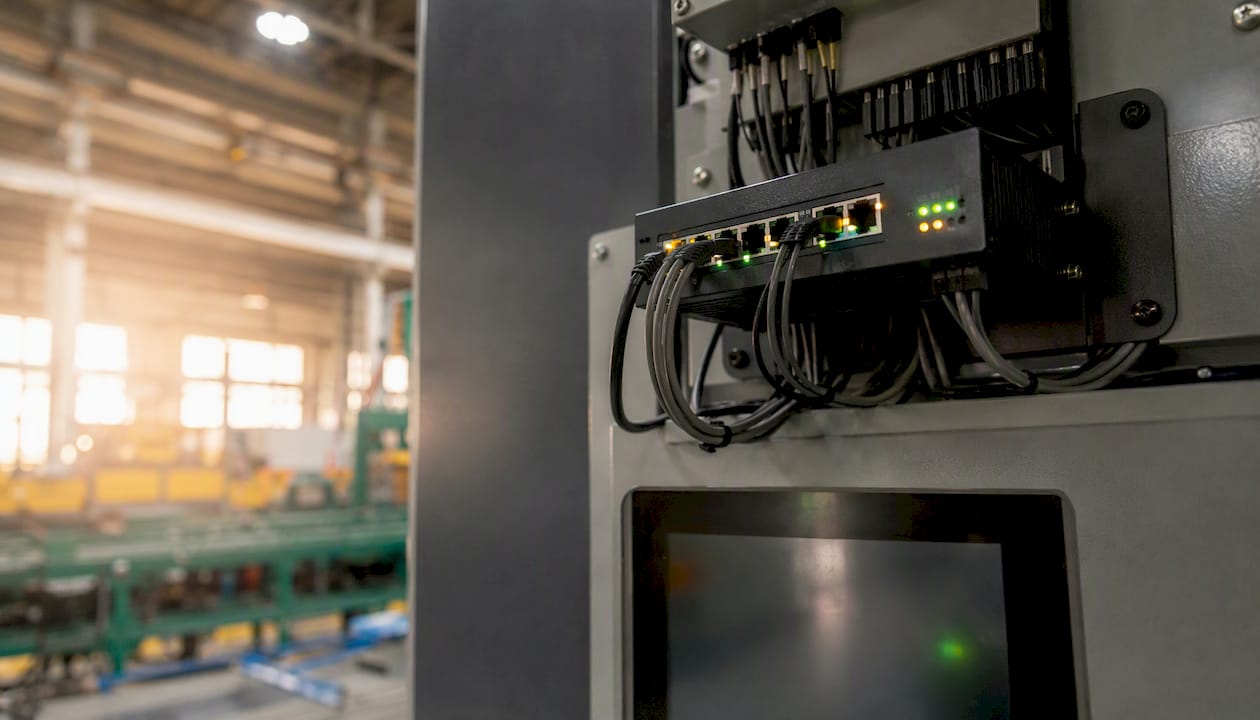
Continuous network monitoring reduces unplanned downtime, shortens mean time to repair (MTTR), strengthens OT/IT security detection, and makes production schedules more predictable. The ABB benchmark of $125,000 per hour is a useful conversation starter, but your actual exposure depends on your product mix, labor model, and customer penalty clauses. Build a plant-specific model before committing to any ROI projection.
The top benefits manufacturers see from 24/7 monitoring:
- Fewer unplanned stoppages through early fault detection
- Faster incident response with shorter MTTR
- Improved security posture across converged IT/OT networks
- Reduced firefighting and emergency repair costs
- Better schedule adherence and customer confidence
- A stable data foundation for ERP, sensor, and AI pilots
Decision-maker takeaway: If your plant runs connected equipment, 24/7 network monitoring is the lowest-cost insurance policy against the outages that derail production quarters.
Table of Contents
- Why continuous network monitoring is now essential on the shop floor
- What are the concrete operational benefits of 24/7 monitoring?
- What features should you require from a 24/7 monitoring service?
- What does a managed 24/7 monitoring engagement actually look like?
- Key Takeaways
- Why monitoring is the pragmatic first step, not the flashy one
- Greatplainsnetworking brings 24/7 monitoring to Oklahoma City manufacturers
- Useful sources and further reading
Why continuous network monitoring is now essential on the shop floor
IT/OT convergence is the single biggest driver. As PLCs, SCADA systems, and IIoT sensors share network infrastructure with business applications, every connectivity gap becomes both a production risk and a security exposure. A packet-loss spike on an OT segment that would have been invisible five years ago can now stall an entire line.
Reliable IT networks in manufacturing matter more as automation density increases. Small network degradations, latency creep on a PLC polling loop, a misconfigured VLAN after a firmware update, rarely announce themselves before they cascade. Without continuous visibility, your team discovers the problem when production stops, not before.
Key pressures making always-on monitoring necessary:
- Legacy equipment with no native telemetry sitting alongside modern IIoT devices
- Ransomware and phishing campaigns specifically targeting manufacturing OT environments
- Regulatory and customer audit requirements that demand documented network governance
- Digital transformation projects (ERP rollouts, AI pilots) that fail when the underlying network is unstable
Managed IT services have shifted from a cost-reduction tactic to core production infrastructure. Plants that treat network monitoring as optional are, in practice, accepting unquantified downtime risk every shift.
What are the concrete operational benefits of 24/7 monitoring?
The benefits are measurable, not theoretical. Condition monitoring programs reduce unplanned breakdowns by 70–75%, and the investment often pays back on the first prevented critical failure alone.
- Security detection: Managed security services provide continuous monitoring with tiered SLAs, shortening time-to-containment and reducing production-stopping incidents.
One frequently overlooked source of loss: micro-stops under five minutes can account for 30–50% of total unavailable production time and are almost never captured in manual shift logs. High-fidelity network and device monitoring makes them visible for the first time.
KPMG's research shows manufacturers adopting managed services report 15–45% reductions in total operational costs, driven largely by cybersecurity, compliance, and data management improvements.
What features should you require from a 24/7 monitoring service?
Require OT-aware, vendor-agnostic, always-on observability with edge processing capability. Generic IT monitoring tools applied to OT environments cause as many problems as they solve.
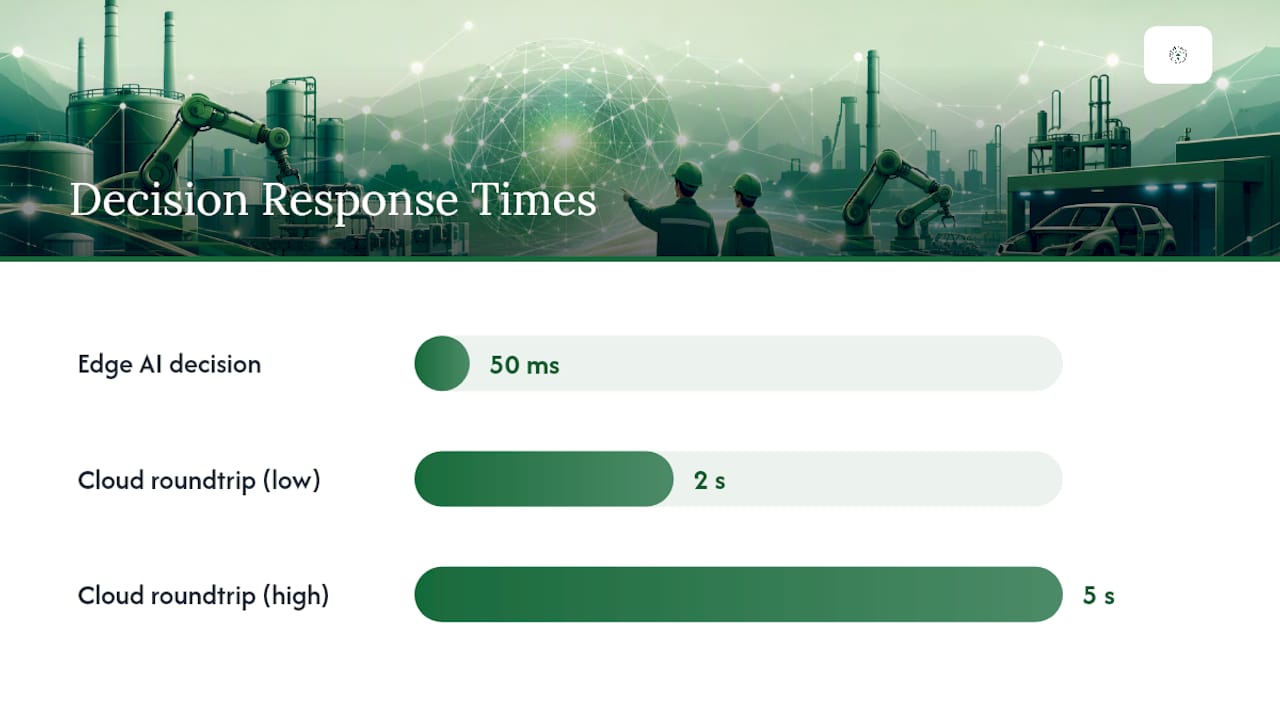
- Edge AI / autonomous response: Edge AI can make shutdown decisions in under 50 ms versus cloud roundtrip times of 2–5 seconds, preventing catastrophic equipment damage in time-sensitive failure modes.
See the manufacturing network management best practices guide for a full checklist of segmentation and governance steps.
Pro Tip: Ask any prospective monitoring vendor how they handle legacy PLCs during onboarding. If the answer involves active scanning without a change-window plan, that is a red flag.
What does a managed 24/7 monitoring engagement actually look like?
A mid-size discrete manufacturer running three production lines and a mix of legacy PLCs and modern IIoT sensors is a representative case. Before managed monitoring, the team averaged multiple emergency callouts per month, with incidents often taking hours to diagnose because no baseline existed.
After a phased 90-day onboarding with a managed partner:
- Emergency callouts dropped significantly as early-warning alerts caught degraded links before line stops occurred.
- MTTR shortened because technicians arrived with pre-populated incident data rather than starting diagnosis from scratch.
- A previously invisible pattern of micro-stops on one line was identified and traced to a misconfigured switch, eliminating a recurring source of scrap.
- Security posture improved through continuous monitoring of east-west traffic between IT and OT segments.
The operational shift is as much cultural as technical. Teams stop firefighting and start managing by exception. That change in daily workload is often what operations managers value most after the first 90 days.
Greatplainsnetworking supports manufacturers through this exact transition, with localized onboarding, OT-aware passive discovery, and SLA-backed response tailored to plant schedules in the Oklahoma City metro area.
Key Takeaways
Continuous network monitoring is the most cost-effective step a manufacturer can take to reduce unplanned downtime and shorten incident response times.
| Point | Details |
|---|---|
| Build a plant-specific model | Replace the $125,000/hr ABB benchmark with your own margin, labor, and penalty figures. |
| Micro-stops are the hidden loss | Stops under five minutes account for 30–50% of unavailable production time and require high-fidelity monitoring to detect. |
| Condition monitoring ROI is proven | Plants with mature programs reduce unplanned breakdowns by 70–75%, often recovering the investment on the first prevented failure. |
| Require passive OT discovery | Active scanning can crash legacy PLCs; passive, OT-aware probes are the safe onboarding standard. |
| Greatplainsnetworking | Offers localized managed IT with 24/7 monitoring, OT-aware onboarding, and SLA-backed response for manufacturers in Norman, Moore, and Oklahoma City. |
Why monitoring is the pragmatic first step, not the flashy one
The conversation around manufacturing modernization tends to jump straight to AI, digital twins, and autonomous production. Those are real destinations. But the plants that get there fastest are the ones that built a reliable, observable network first.
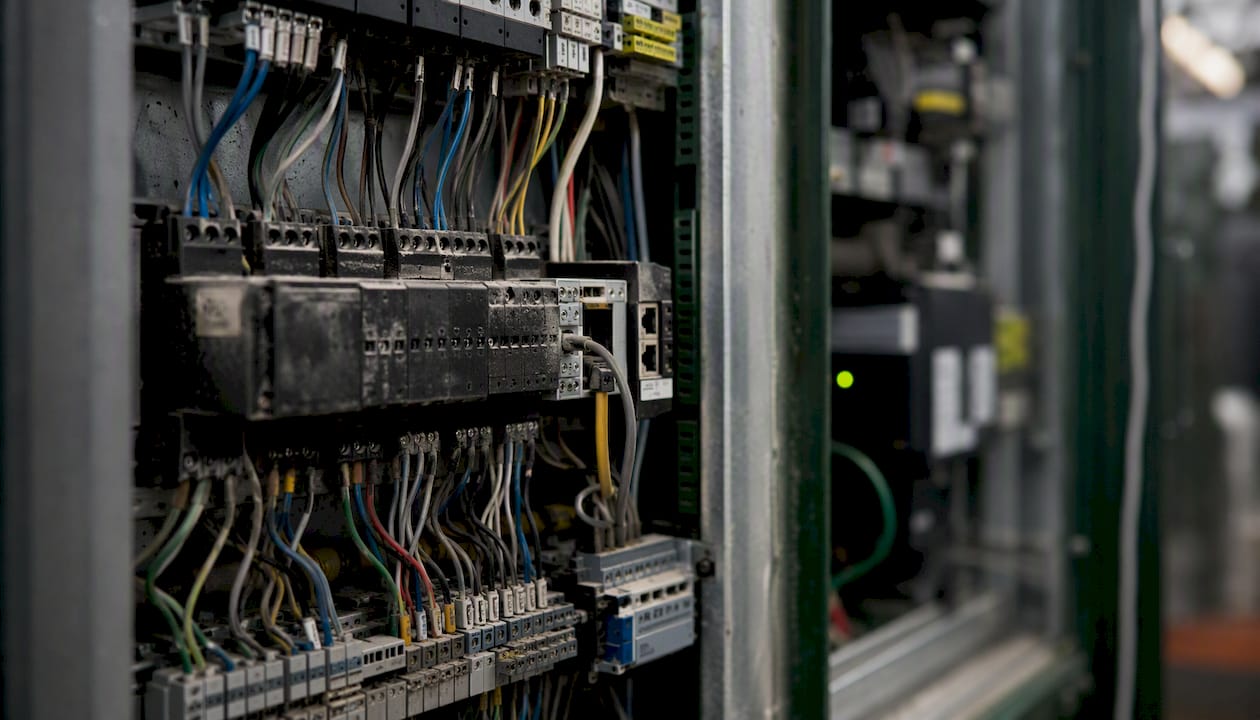
Continuous monitoring is not glamorous. It does not generate a press release. What it does is reduce the firefighting that consumes your reliability engineers' time, create the clean telemetry data that AI pilots actually need to work, and give operations managers the confidence to approve the next digital project because the last one did not destabilize the floor.
The manufacturers who skip this step and go straight to advanced analytics tend to discover, expensively, that their data is too noisy to trust. Monitoring is the scaffolding. Everything else gets built on top of it.
Greatplainsnetworking brings 24/7 monitoring to Oklahoma City manufacturers
Manufacturing shops in Norman, Moore, and Oklahoma City get a concrete operational advantage from Greatplainsnetworking's managed IT support: 24/7 network monitoring with OT-aware onboarding, passive discovery for legacy equipment, and SLA-backed incident response, all without a long-term contract.
The service covers IT and OT visibility in a single engagement, integrates with MES and ERP systems, and includes cybersecurity protection for converged plant networks. Onboarding follows the phased discovery-to-scale approach described above, coordinated around your production schedule to avoid disruption. Start with a 30-day visibility assessment: contact Greatplainsnetworking to schedule yours and get a plant-specific baseline within the first month.
Useful sources and further reading
- The Real Cost of Unplanned Downtime in Manufacturing (2026 Data)
- Industrial Downtime Cost Benchmarks: What Published Studies Actually Show
- Managed IT Services: How They're Revolutionizing Manufacturing | TMC Insight
- Downtime in manufacturing
- Unparalleled pressures: why industrial manufacturing is turning to managed services
- True cost of unplanned downtime manufacturing
- True cost manufacturing downtime — Teeptrak
- Why Managed Security Services Are No Longer Optional for Mid-Market Manufacturers? - Intwo
Recommended
Want help putting this into practice?
We'll audit your security, speed, and hardware in under an hour — no commitment, no sales pitch. Just a clear roadmap of what to fix and why.